Chapter 3: The Work Begins
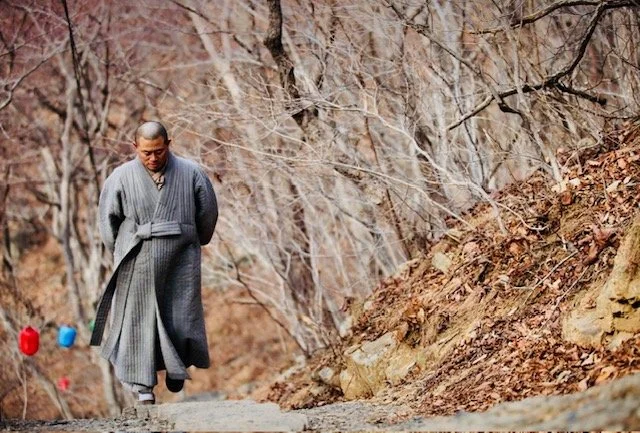
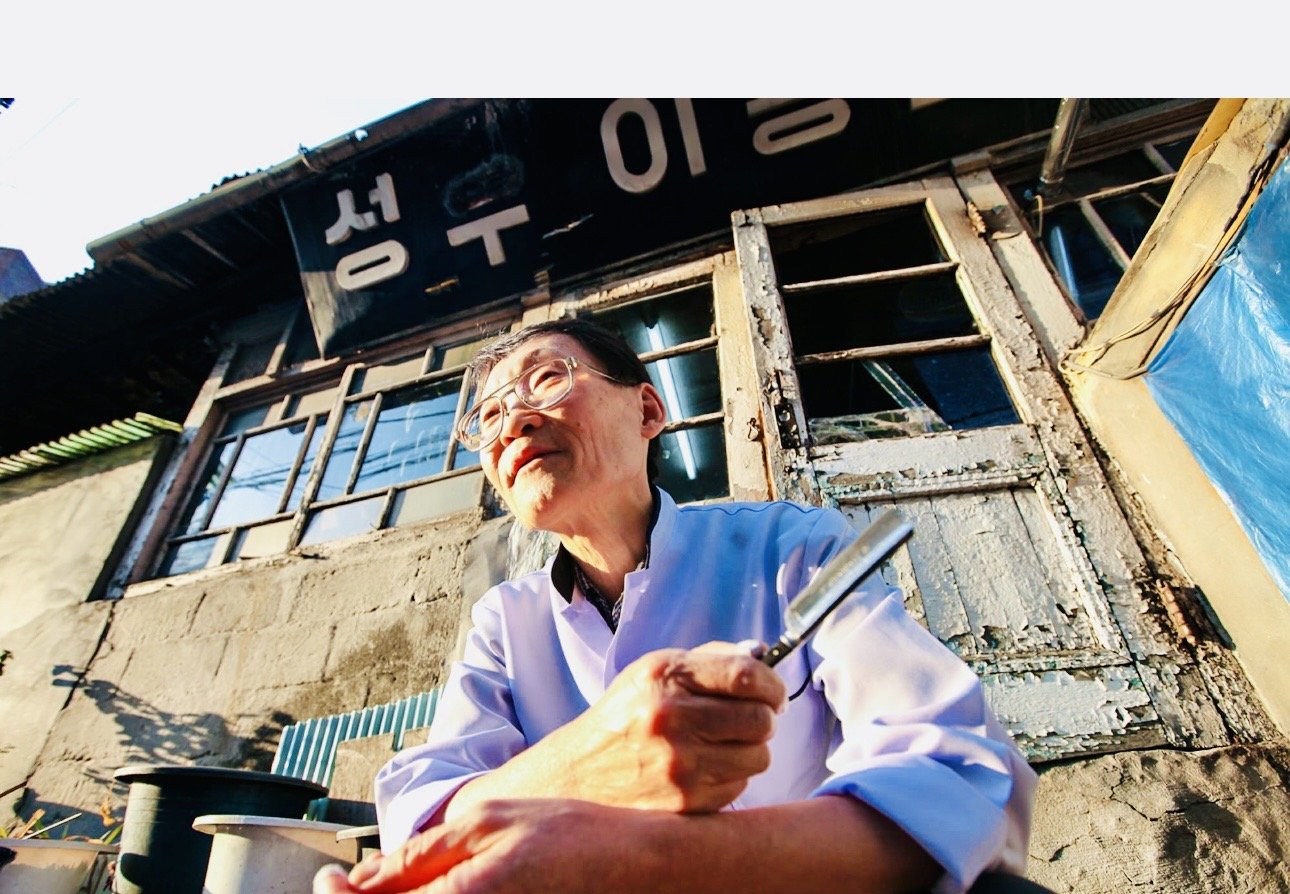
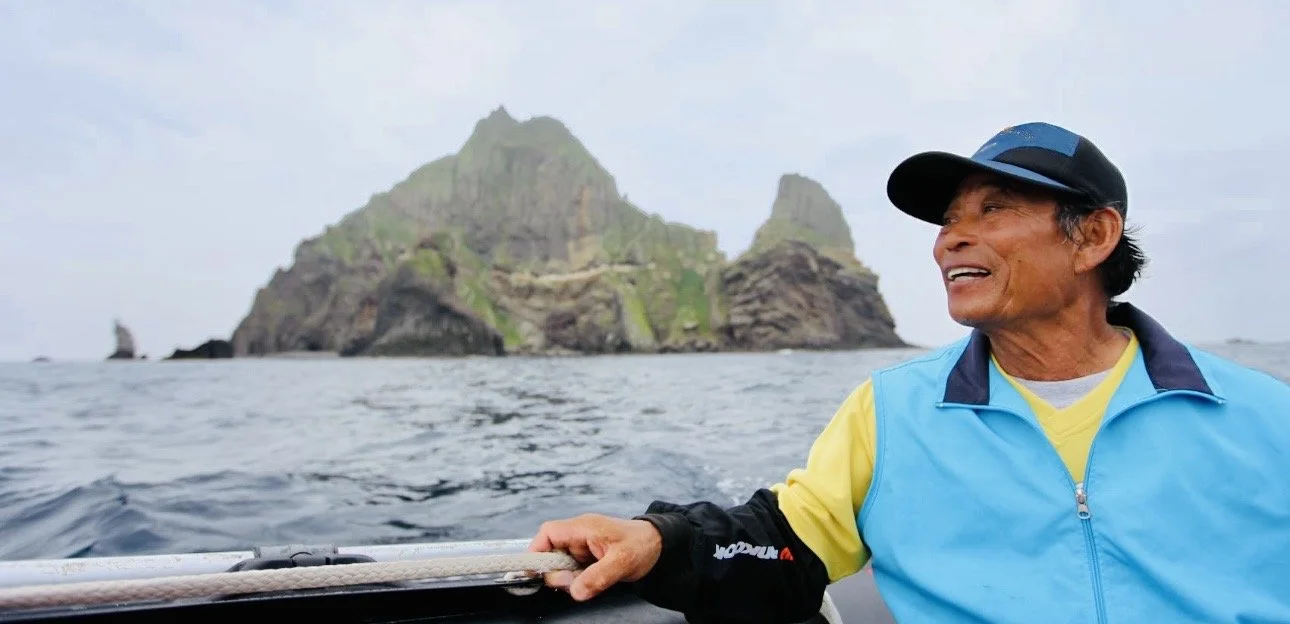
As the months passed, Matt and I crisscrossed Seoul and the Korean peninsula in the Benzo, pursuing stories down city alleyways and country roads.
When the car couldn't take us farther, we switched to trains, subways or long walks through neighborhoods we couldn't read.
Nearly every assignment turned out to be about memory.
South Korea glittered with prosperity, but beneath the neon people were still living with war, dictatorship, starvation and loss. We met North Korean defectors, aging survivors and parents carrying impossible grief.
They all seemed to be trying to survive what they could not forget.
*
The infant drop box sat in a working-class neighborhood of Seoul, its walls lined with pink and blue blankets. A thin, metallic chime rang through the house whenever the small door opened.
One by one, babies had been left there—mostly at night, when parents could slip away unseen. Some still had their umbilical cords attached. One was deaf, blind, and paralyzed. Another had a misshapen head. Others had Down syndrome, cerebral palsy, permanent brain damage.
To a white-haired Christian pastor named Lee, they were all perfect.
They found a home with his wife and a small staff. Over a decade, Lee took in nearly three dozen children. He changed their diapers, answered their cries in the middle of the night.
He built a place most people preferred not to see.
Decades earlier, his wife gave birth to a boy so severely disabled that Lee hid it from her for weeks. The child had cerebral palsy. A massive cyst on his head cut off blood flow, leaving him with profound brain damage.
“I asked God, ‘Why would you give me a child like this?’” Lee said.
The boy spent his first fourteen years in a hospital. To pay for his care, Lee sold the family market, borrowed heavily, and sank into debt.
When we visited, he moved quickly through the orphanage, kissing each baby on the forehead. The walls were covered with photos—children named for when they arrived: Midnight. Autumn.
Matt and I held it together—until we saw his son.
At 25, the young man lay on a bed, his legs twisted beneath him. He made small, guttural sounds as Lee switched on a suction machine, clearing his throat through a tracheal opening. Machines kept him alive. So did his father.
His parents had named him Eun-man—full of God’s grace.
I stepped outside, overcome with emotion.
When I returned, Matt was still there.
We once rode in a van packed with gossiping old women. One 82-year-old covered her mouth to whisper girlishly. “We argue a lot about the food,” she said, wrinkling her nose. “To tell you the truth, some of these old ladies are grouchy.”
We were at a group home outside Seoul, where eight women in their 80s and 90s bickered over everything from territory to room temperature. They were known as halmoni—grandmothers—and, more darkly, as comfort women.
Before and during World War II, they had been forced into sexual slavery by Japanese forces—raped and beaten for months and years—then expected to keep quiet for the rest of their lives. They gathered outside the Japanese Embassy, banners in hand, refusing to leave.
At their hillside house, some wore makeup and bright hats. Others kept to robes and slippers, carrying their bitterness close.
As they spoke, Matt worked quietly, his camera lingering on their hands, their faces. He waited out the long pauses between words.
He listened.
“We are all mentally ill and physically damaged,” one woman said. Then, after a moment: “I don’t want to talk about it anymore. It brings up bad memories from the bottom of my insides.”
They were tired now.
On the ride back, Matt sat with the camera in his lap. He didn’t review the photos. He just stared out the window, as if listening still.
At the North Korean border, we found a man marked by his years in Kim Jong Il’s inner circle. He had served as the dictator’s bodyguard, living under constant watch, unable to leave or contact his family.
Caught trying to defect, he was sent to a labor camp, where he lost half his weight. After his release, he fled to China and then South Korea.
When Matt and I met him, he was raising ducks a few miles south of the land he had fled. He drank to quiet what he remembered. Empty beer and soju bottles crowded the hovel. His knuckles ached from smashing bricks while serving as Kim’s protector. His hands trembled as he lit one Marlboro Red after another.
Now his life was this: Ten thousand ducks. Two German shepherds. Kim Jong Il flickering on the television. Just across the border, nothing had changed.
On a cold February morning, he opened the door to a blue Quonset hut.
“Ducks,” he said. “Ten thousand ducks.”
The birds surged forward in a blur of feathers and noise. He grabbed a mallard by the neck, his hands unsteady from booze and the cold.
The ground was slick with droppings. But Matt didn’t hesitate. He dropped to his chest, then raised the camera.

On another day, we went to see an old man looking for the son he’d given away.
It was late 2011. We had an address. Gray snow packed the gutters. We took the subway out, switched lines, then walked. The buildings got smaller. The faces older.
The apartment was bare. Winter light barely reached into the room. On the wall was a large calendar with big numbers—made for eyes that no longer cooperated.
The old man said that it had taken a lifetime to understand what he’d done. Each morning, and at odd moments, he thought about the boy. Does he have his mother’s face? Does he know who his real father is? Is he happy?
Then the guilt.
The year was 1962. South Korea was still broken from the war. His wife died of starvation when their son was eight months old. He begged at temples. He asked new mothers to breast-feed his child. Then he injured his foot and couldn’t work.
A wealthy banker offered to take the boy for ten years—for $35,000. An unimaginable sum. I’ll pay him back, he lied to himself. I’ll come get him.
At least the boy would be safe. But the man wouldn’t.
In 1970, he was taken by North Korean forces while working on a fishing boat.
He spent thirty years in captivity.
The thought of his son kept him alive. He escaped in 2000.
When he returned, the boy was gone.
He still saw his son as an infant. “I don’t expect to be called father,” he said. “I just want to see my son before I die. Then I can face my wife in the afterlife.”
Outside, Matt photographed him on the sidewalk. His step had a slight hitch; the old injury still marked his gait. He tried to stand straight for the camera.
On the subway back, Matt finally spoke. “I wish we could help him.”
“We tell it right,” I said.
Matt nodded. Then looked away.
The old man never found his son.
THURSDAY: The Drift—the night that almost killed me.