Chapter 2: The Benzo
I’d spent years chasing a foreign posting. In 2008, I got the call. It wasn’t the one I expected.
I’d applied for Beijing. My wife was born there. We visited often and talked about moving there.
“We want you in Korea,” the foreign editor said.
I looked at my wife and raised both hands in surrender. We’d never been.
Of course I said yes. I would have taken a gig anywhere.
Even Mars.
For Matt, Korea wasn’t an assignment. It was an escape.
At home growing up, evenings turned unpredictable. It was something you survived.
His mother drank hard. Bottles were hidden in plain sight—liquor poured into juice containers, passed off as something harmless. Once, she stabbed his father with a pencil while he slept.
His father never fought back. He absorbed it. Went quiet. Matt and his brothers didn’t bring friends home. They kept people away from what lurked there after six o’clock.
Taekwondo gave Matt structure—rules, discipline, somewhere to put the energy. A teenage trip to Korea sealed it. The place made sense to him in a way Canada never had: the hierarchy, the intensity, the unspoken codes. A system he could learn, even master.
After high school he worked a few years, saving for college. When things got worse at home, he bolted: He applied to a university in Seoul to study Korean, halfway around the world. He once told me that if he went any further on the globe, he’d be circling back home.
Korea wasn’t just a destination. It put distance between him and where he grew up. He spent years trying to become the kind of man his house never taught him to be.
Matt became my interpreter—not of the language, but of Korea itself. He pushed back on snap-judgments. In my eyes, Korea was arrogant and insecure—tribal, distrustful of outsiders. Its f-bomb was “foreigner.”
Matt loved Korea because it offered rules. To me, it felt like a dare.
He told me to let the country reveal itself—the tenderness and ugliness in the same frame.
Korea couldn’t be forced.
Then there was alcohol.
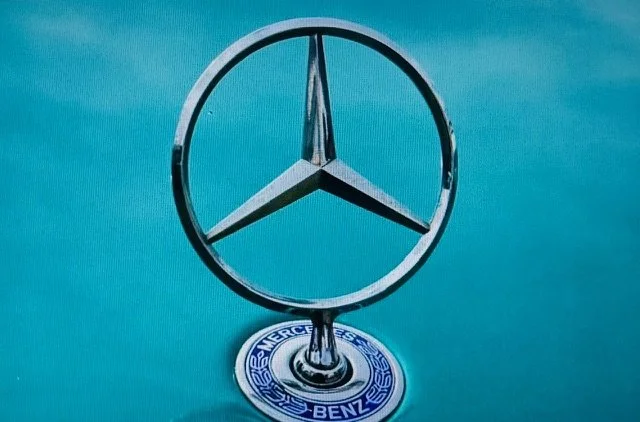
Bringing the Benzo was my wife’s idea. She thought it gave us cachet—the kind of car you saw in Gangnam, Seoul’s swankest neighborhood.
The car was light gray with leather interior and only 50,000 miles. Its steering was tight, the accelerator quick.
Good for getting out of trouble.
We’d shipped it over by container. At the port in Incheon, the clerk said the Benzo was too old to meet Korea’s strict emission standards.
Born in China and a longtime American citizen, my wife had left a plum job so I could go to Korea. A financial analyst, she was detail-driven and told the clerk she had already gotten the OK from Korean officials in Washington.
“Shut up,” he said.
We hustled out of the office. Days later, a man from the registration office confirmed the Benzo couldn’t be driven on Korean soil.
I’d paid $1,200 to ship it. What was I supposed to do now?
“Ship it back,” he said.
That car wasn’t going back. It was staying in Korea—with me. I'd come halfway around the world. I wasn't surrendering to a bureaucrat before I'd unpacked my bags.
I drove anyway. The cardboard temporary plates were my cover—dirty enough to fool a cop. If I got stopped, I'd have to talk my way out of it.
One day, leaving a shopping mall in chaotic weekend traffic, I followed a line of cars making an illegal turn. Nearby, a uniformed policeman waved over car after car. I was next.
I clenched the wheel as I slowed. He peered into the car, studying my face. Then he stepped back and waved me through, motioning forward the car behind me. I didn’t ask questions. I slipped into traffic.
My wife turned to me. “This is exciting,” she said.
One winter night, Matt and I were on an expressway, approaching a well-lit toll plaza. It was snowing hard. Traffic was light. As we rolled toward the booth, the attendant reached out for the fare.
Matt turned to me. “Run it.”
There was nothing to stop us. No real plates. No paper trail. We were ghosts.
I hit the gas and blew through the toll at fifty. Snow spun in the headlights. Behind us, the attendant stood with her arms raised, mouth open.
Matt was laughing.
Then we were gone.
MONDAY: The Work Begins—Other People’s Damage, Up Close.