Chapter 4: The Drift

One afternoon in Seoul, Matt and I wandered an alley to a hidden alcove where older women served makgeolli—a lightly sparkling Korean rice wine, deceptively strong.
The milky liquor flowed from dented metal kettles used for generations. We drank from wooden bowls. As the makgeolli took hold, the nights blurred. We stayed out longer, pushed further, and said yes more often than we should have.
Once, as I was talking, a small bubble of spit flew from my mouth and landed on Matt’s lip.
He recoiled.
A memory flashed. His brother had once pretended to sneeze, flinging green slime from a gumball machine across Matt's face while everyone else laughed. Matt panicked.
“Get it off! Get it off!”
I wiped it away. After that, I needled him—leaning in, slurring “Sufferin’ Succotash!” in my best Sylvester-the-Cat voice like I might spray him again.
Matt never held it against me. To him, it was just roughhousing.
A few months later, we were on the hunt for a photograph of Seoul’s nighttime sea of red-lit church crosses. We’d seen a magazine shot that captured dozens in a single frame and set out to recreate it.
Emboldened by a few bowls of makgeolli, we roamed a hilltop neighborhood overlooking a valley of red crosses, a toothpick in my mouth. Hours passed. We got nowhere.
We knocked on doors, asking to come inside—or climb onto rooftops—for a better angle. Most people smiled, hesitated, then, against all logic, waved us in. Still nothing.
After midnight, I called it. Our shots were good enough. I suggested drinks.
Matt didn’t see it that way.
At 3 a.m., he got back on his bike and retraced our steps. I’d quit. He stayed until dawn, circling the same hillside, refusing to leave it alone.
While I slept, he climbed a church steeple—fifty feet up in the dark—to get the shot.
That’s what it took.
Matt introduced me to Ando, a martial artist and leader of a Buddhist order known as the Fighting Monks. Again, Matt wanted the perfect photo—something that evoked discipline and calm.
He came back with photographs.
They weren’t good enough.
The following weekend, he returned to Busan without me—on his own dime, five hours away—to try again. His shot of the monk walking a bamboo forest path made the front page.
He didn’t celebrate.
He was already thinking about the next one.
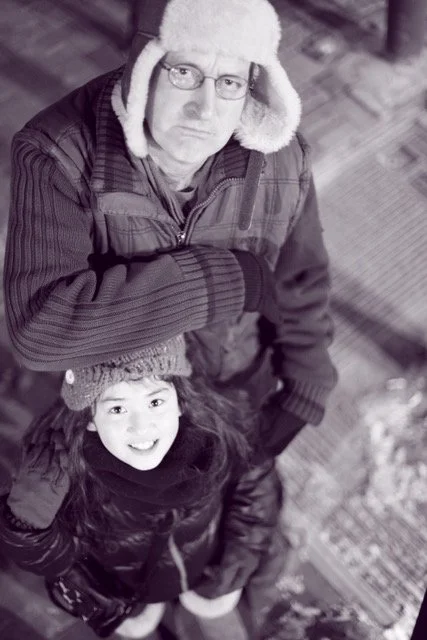
As time passed, Matt and I drank more—usually at the makgeolli shop, on low stools, bowls in hand as Matt translated the Korean on the walls.
Christmas Eve 2011 was one of those times. It was bitter cold. My breath hung in front of me. My hands went numb without gloves.
We started early. I'd spent the week covering the death of Kim Jong Il, fielding constant calls from Los Angeles demanding something no one else had. I was exhausted.
That night, Matt brought along his ten-year-old daughter, Somi. He kept her close. We left the makgeolli place around nine and took a cab to Itaewon, where the expats gathered. I’d left the Benzo at home. I knew better. We ended up at a bar called Bulldogs. The bouncer stopped Somi at the door.
That’s when Matt leaned in.
“She’s my daughter,” he said in Korean, not asking. The man hesitated, then stepped aside. Somi slipped past him like she’d done it before.
I kept drinking. Matt didn’t. He stayed near Somi as she talked with two Americans—a father and son. They couldn’t believe a girl was allowed inside a bar. I kept bringing them drinks. The son wandered out into the street. Matt went after him and brought him back.
I stayed where I was.
By the time we stepped outside, it was after midnight. The temperature had dropped to well below freezing. No snow. Just a hard, punishing cold.
We got into a cab, cutting through a darkened wooded park on the way to my apartment. I sat up front with the driver; Matt and Somi were in the back. As we started down the final slope, I rolled down the window, leaned out and vomited.
The driver slammed the brakes. He’d seen enough. He pulled over and kicked us out.
I lay on the frozen ground. Steam lifted off my jacket.
Somi said she was cold. Matt told her to start doing jumping jacks, to keep moving.
“This is what you do for a friend,” he told her. “We don’t leave him.”
He looked for another cab. None came. He called an ambulance. They arrived fast—lights cutting through the dark. They rolled out a stretcher and asked where to take me.
Matt shook his head.
“Home.”
“We’re not a taxi.”
Matt didn’t move. “If you leave,” he said, “he’ll die out here.”
They hesitated.
“It’s Christmas,” he said.
That did it.
They loaded me up.
Somi stood off to the side, watching her father. I don’t remember the ride. Or the elevator. Or the hallway. They left me on the floor of my apartment. One of them set a bottle of water beside me.
“Merry Christmas,” he said in broken English.
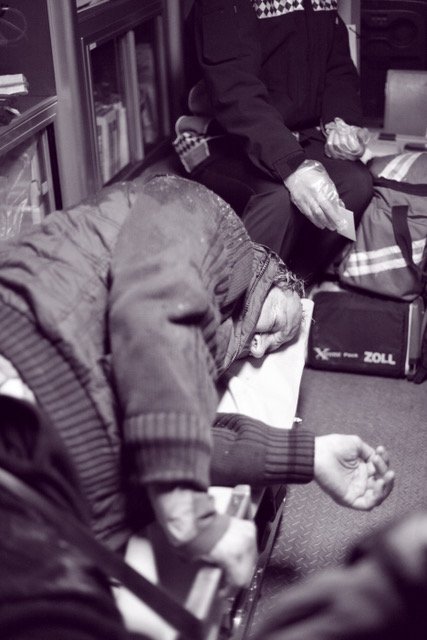
I don’t know how long I lay there. Matt didn’t say much afterward. He sent a photo—me slumped inside the ambulance. Hair wild. Mouth open. Snot in my nose.
At first, I was embarrassed. Angry.
I got over it.
Matt took pictures.
It’s what he did.
But he stayed.
SUNDAY: The Day I Went Too Far