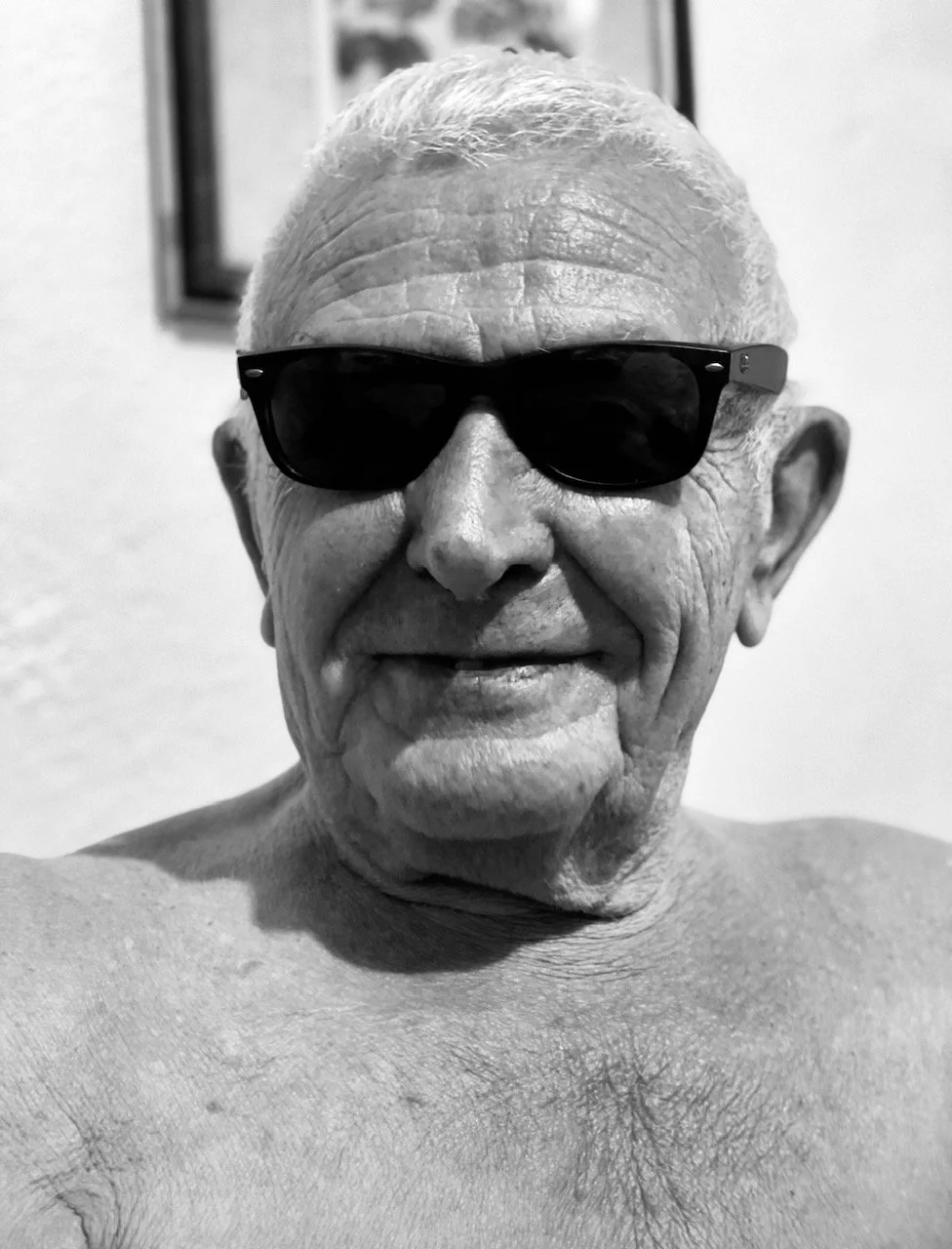
Giovanni’s Table: Forty years of conversation
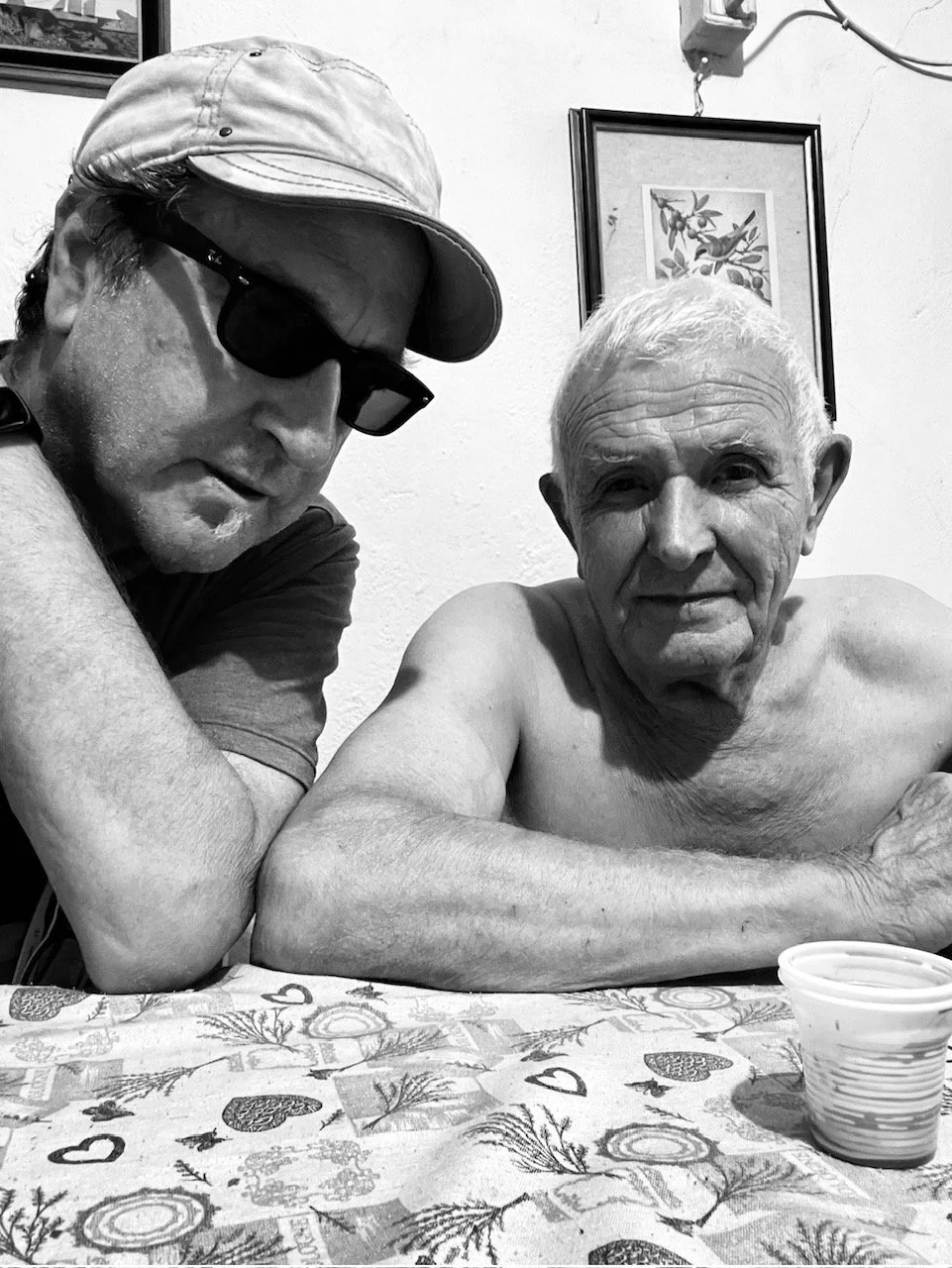
Eventually, every road in Pomarico seems to lead me back to the same place: my cousin Giovanni’s kitchen table on the outskirts of town.
After all the noise of the village—in recent days the festivals, gossip, processions—this is where Pomarico narrows to its essence: one kitchen table, one cousin, one conversation resumed year after year.
Our grandfathers were brothers. Mine left for America. His stayed behind.
For nearly forty years, we have sat at Giovanni’s table trading stories about lives lived on opposite sides of the Atlantic. Since I first arrived in Pomarico, he became the constant in a town I barely understood.
With a farmer’s patience, he guided my efforts to learn Italian. He always spoke slowly to make sure I understood. When I bluffed—indicating that I followed something I really didn’t—he would call me on it, pause, and begin again.
He has schooled me on the power of certain Italian words and how a man is expected to behave in a village this small. In Giovanni’s view, even table manners matter—no cellphones allowed.
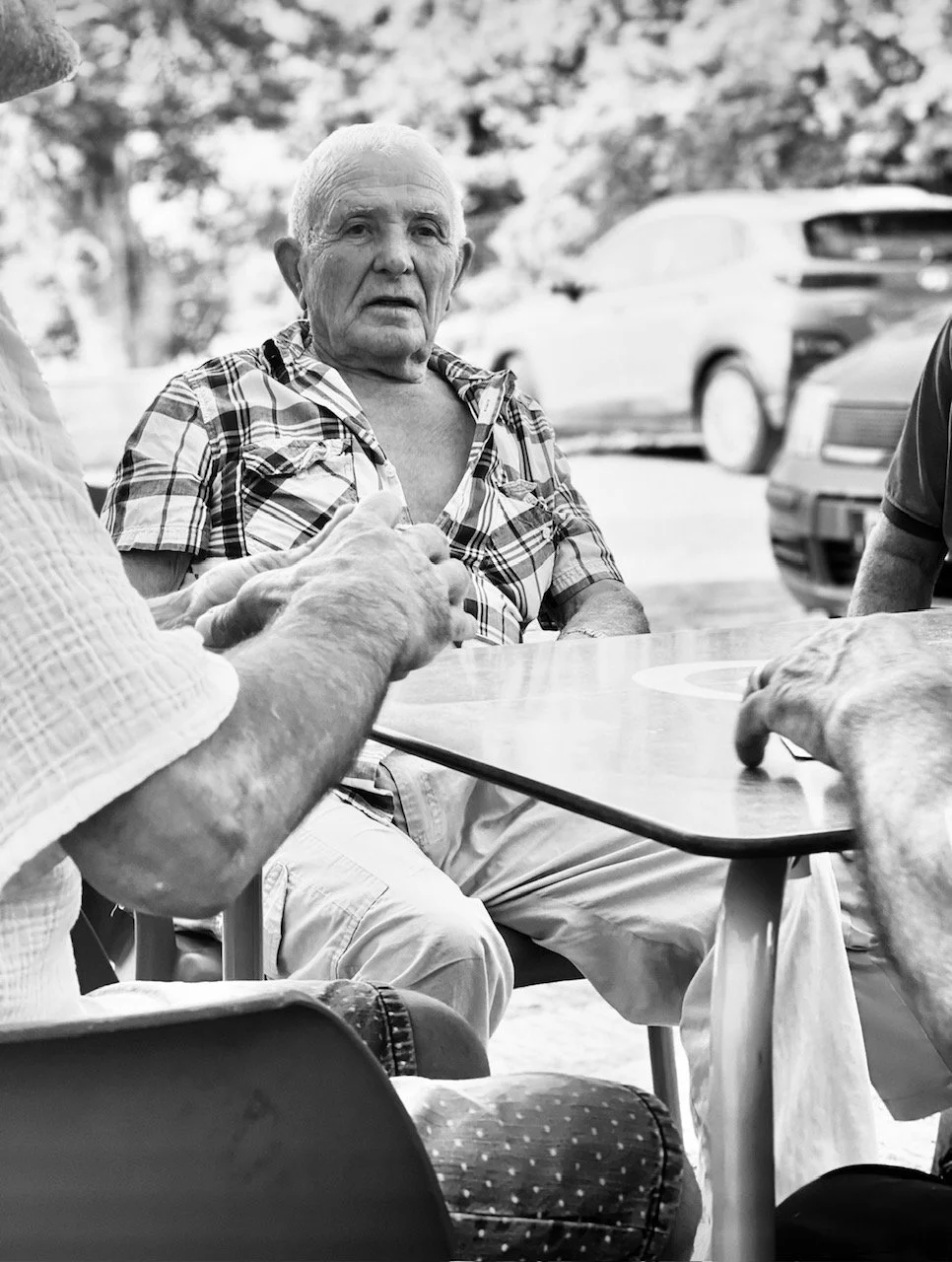
Giovanni tells a story about the time my grandfather returned to Pomarico after six decades away—and his disappointment at learning that his remaining brother and sister here had died many years before.
My grandfather had waited too long to come home. I will not make the same mistake.
I return to Pomarico as often as I can. On each visit, I notice time’s effect on my elder cousin, the last person alive who truly remembers my grandfather. Despite his years, he remains unmistakably himself.
Four decades ago, Giovanni moved through Pomarico with a swagger. With little formal schooling, he was a carouser who organized daily card games at village bars and always called for the next round. For a long time, he was one of the few men in town who owned a car.
I still call him il Sindaco—the mayor—because for so long he was the charming outlaw everyone knew. After long days working as a farmer and firefighter, he blew off steam drinking, gambling and holding court.
There was an unofficial bar rule: No card game started until Giovanni arrived.
When he drank too much, he never went straight home. He knew his wife Laura would be waiting, so he drove out to the farm to sober up before facing her.
Laura sat next to him as he spoke. Her eyebrows rose at the confession.
She reached out and grabbed his cheek the way a mother scolds a wayward son.
Those days are gone.
At eighty-eight, my cousin still reports to his fields each day at dawn. He gathers eggs and tends to whatever needs doing, still tied to the place that has sustained him through youth, fatherhood and old age.
Giovanni has been slowed by three successive heart attacks that occurred in one day last year. He suffered one at the farm and, with the help of his grandson, Gabriel, struggled home, where he had a second in his kitchen. He suffered a third in the ambulance on the way to the hospital.
The afternoon almost killed him.
Now Laura runs the show: she strictly manages his schedule, allowing only so many hours on the farm—and rarely, if ever, alone.
Under her guidance, he quit drinking. He’d given up cigarettes long ago, but he won’t quit the card games he plays each afternoon with the same old cronies.
Within Giovanni, a boyish spirit survives—one I recognize in myself. He’s white-haired, his face rough with beard stubble. His frame remains compact, his center of gravity low to the ground, as if always ready for work.
Little stops him. Not even three heart attacks.
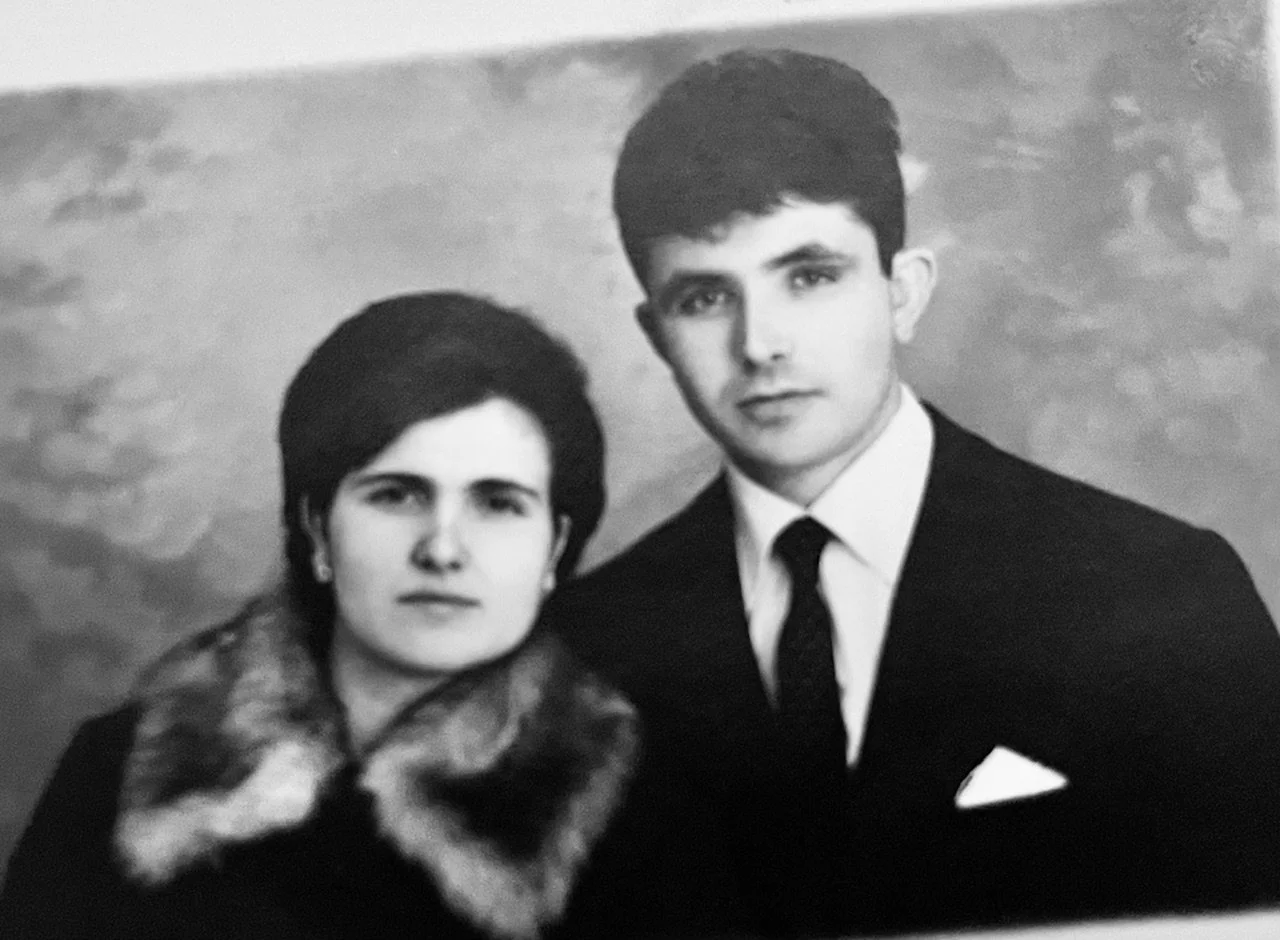
One morning, Giovanni and Laura take me out to the farm to witness the changes. Giovanni’s aunt Angela willed him this land decades ago and now it is time to pass it on to the next generation—to his daughter Antonia and his grandson Giuseppe.
Giuseppe has worked hard to transform the house into something more modern, adding a bathroom, bedroom, and a new kitchen—creating a place no longer devoted entirely to labor.
For Giovanni, this house has provided a place of rest while he tilled the resistant soil to produce something out of nothing. Now he watches as much as he works.
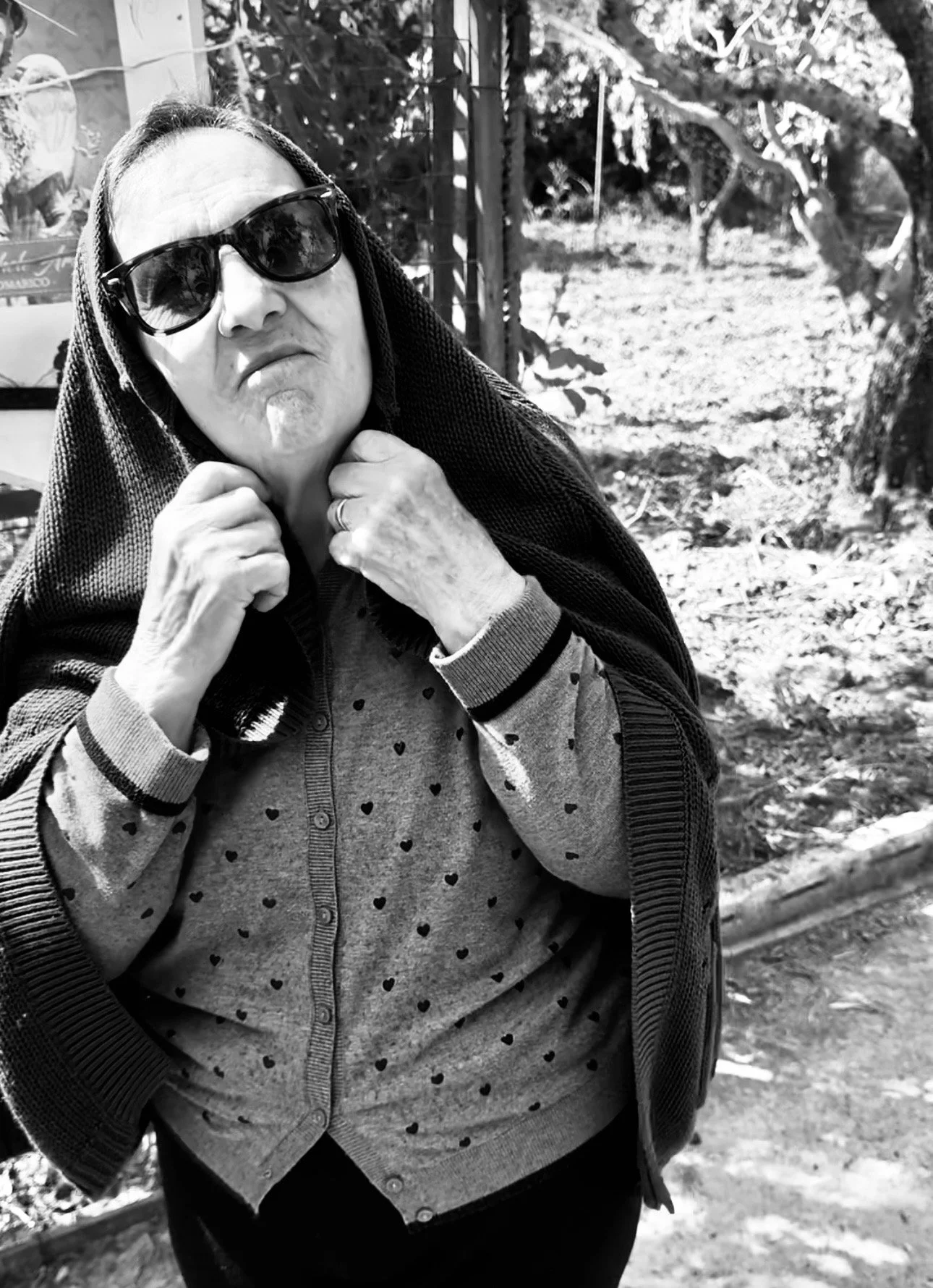
Laura has created a flower garden where he once grew tomatoes. “All of these flowers,” she says, “I planted them.”
She is a petite woman who wears a blue sweater pulled over her head like a shawl against the morning chill. She softens the place. We walk to the chicken coop and she feeds the four cats who patrol the property.
The chickens look on jealously. But they have already been fed hours before. In the afternoon, the hens will deliver their eggs. Giovanni will make a special trip to collect them, .though perhaps it is only an excuse drive the shaded country road to his farm. one more time, while it is still his.
He once told me that he didn’t need the God offered by the church. Gesturing to his fields, he said: “I have this.”
His daughter has made other changes to her father’s farm: She installed a solar panel over the chicken coop to run two security cameras that scan the farmhouse.
Giovanni knows change must come. But he has resisted this one. Now his daughter can keep watch over the farmyard at any time, using an app on her phone, even when she’s at work. If she sees that his car has been there too long, she’ll call him, or report to her mother.
“He’s been there too long,” she’ll say. “It’s not healthy. It’s time for him to come home.”
Most days, Giovanni doesn’t want to leave this place. He lingers before he turns the ignition on his compact car.
Because one day, he knows, when he leaves, it will be for the last time.
It’s lunchtime, and Laura lays down plates containing spirals of pasta with tangy homemade sauce. There’s succulent lamb, plates of olives and carrots covered in oil made from olives Giovanni grows on his farm.
Back home in America, I buy olive oil in dark green bottles stamped with Italian words and pastoral labels meant to suggest authenticity. But most of it tastes flat and anonymous, more commodity than craft.
Giovanni’s oil was something else entirely. It announced itself immediately—coating the tongue with the taste of the surrounding hills themselves.
I try to describe to my cousin what I am experiencing, but words fail me. I point to a glass of red table wine—also produced here by hand. Like the wine, I tell him, the oil is meant to linger on the tongue, to be consumed slowly, savored.
Over a few hours, we talk in Italian. Giovanni still speaks slowly, so I can grasp his meaning. Our conversation moves from the Catholic Church to human mortality to Italian politics, and finally to the argument between faith and science.
We laugh about the day he allowed me to try out his motorized tiller, which bucked from my hands like a headstrong colt before Giovanni stepped in and calmly regained control.
In those fields, he possessed a mastery no education could teach.
“You’re a professor of the fields,” I say.
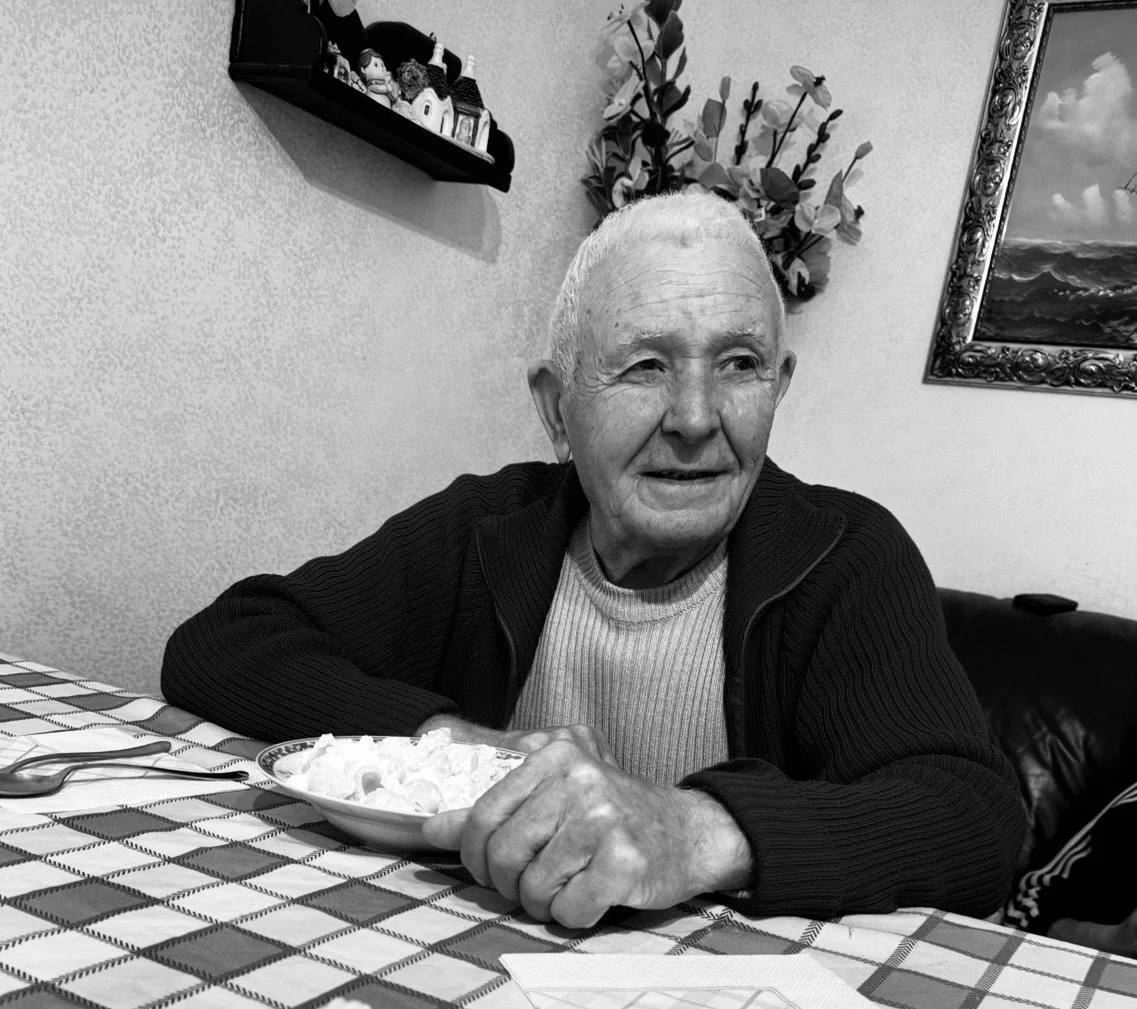
At the kitchen table, we’re joined by Giovanni’s grandson Gabriel. He was there when Giovanni suffered his heart attack and the experience has bonded the two.
Gabriel has just broken up with a girlfriend, yet remains unfazed.
“Morto un papa,” he says, repeating an Italian phrase, “se ne fa un altro.”
When one pope dies, they make another.
Giovanni smiles. It’s the old smile of the drinker, the card-player, the hell-raiser. These are the moments I crave in Pomarico. This is why I return.
A few years ago, at my request, Giovanni showed me the mausoleum in the nearby graveyard where he will one day rest. Next to Laura. Their places are set. He is ready.
As I leave, I turn to my cousin.
“Don’t change,” I say, “ever.”
“Not until they take me to the cemetery,” he tells me.
He says it matter-of-factly, like a farmer discussing the weather.
IN ITALIANO ….
Alla fine, ogni strada di Pomarico sembra riportarmi allo stesso posto: il tavolo della cucina di mio cugino Giovanni, alla periferia del paese.
Dopo tutto il frastuono del villaggio – negli ultimi giorni le feste, i pettegolezzi, le processioni – è qui che Pomarico si riduce alla sua essenza: un tavolo da cucina, un cugino, una conversazione che riprende anno dopo anno.
I nostri nonni erano fratelli. Il mio partì per l'America. Il suo rimase qui.
Per quasi quarant'anni, ci siamo seduti al tavolo di Giovanni a scambiarci storie di vite vissute su sponde opposte dell'Atlantico. Da quando sono arrivato a Pomarico, lui è diventato una costante in un paese che a malapena capivo.
Con la pazienza di un contadino, ha guidato i miei sforzi per imparare l'italiano. Parlava sempre lentamente per assicurarsi che capissi. Quando bluffavo – fingendo di seguire qualcosa che in realtà non capivo – mi smascherava, faceva una pausa e ricominciava.
Mi ha insegnato il potere di certe parole italiane e come ci si aspetta che un uomo si comporti in un piccolo paese come questo. Secondo Giovanni, anche le buone maniere a tavola contano: niente cellulari.
*
Giovanni racconta di quando mio nonno tornò a Pomarico dopo sessant'anni di assenza, e della sua delusione nello scoprire che i suoi fratelli, gli unici rimasti in città, erano morti molti anni prima.
Mio nonno aveva aspettato troppo a lungo per tornare a casa. Io non commetterò lo stesso errore.
Torno a Pomarico il più spesso possibile. Ad ogni visita, noto gli effetti del tempo sul mio cugino più anziano, l'ultima persona ancora in vita che ricorda davvero mio nonno. Nonostante l'età, è rimasto inconfondibilmente se stesso.
Quattro decenni fa, Giovanni si aggirava per Pomarico con aria spavalda. Con poca istruzione formale, era un festaiolo che organizzava partite a carte quotidiane nei bar del paese e offriva sempre il prossimo giro. Per molto tempo, è stato uno dei pochi uomini in paese a possedere un'auto.
Lo chiamo ancora il Sindaco, perché per tanto tempo è stato l'affascinante fuorilegge che tutti conoscevano. Dopo lunghe giornate di lavoro come contadino e pompiere, si sfogava bevendo, giocando d'azzardo e tenendo banco.
C'era una regola non scritta al bar: nessuna partita a carte iniziava prima dell'arrivo di Giovanni.
Quando beveva troppo, non tornava mai direttamente a casa. Sapeva che sua moglie Laura lo avrebbe aspettato, quindi andava in macchina fino alla fattoria per smaltire la sbornia prima di incontrarla.
Laura gli sedeva accanto mentre parlava. Alzando le sopracciglia, sentì la confessione.
Allungò una mano e gli afferrò la guancia, come una madre che rimprovera un figlio ribelle.
Quei tempi sono finiti.
A ottantotto anni, mio cugino si reca ancora ogni giorno all'alba nei suoi campi. Raccoglie uova e si occupa di tutto ciò che c'è da fare, ancora legato al luogo che lo ha sostenuto durante la giovinezza, la paternità e la vecchiaia.
Giovanni è stato debilitato da tre attacchi di cuore consecutivi avvenuti in un solo giorno l'anno scorso. Ne ha avuto uno in fattoria e, con l'aiuto del nipote Gabriel, è riuscito a tornare a casa a fatica, dove ne ha avuto un secondo in cucina. Un terzo in ambulanza, mentre veniva portato all'ospedale.
Quel pomeriggio lo ha quasi ucciso.
Ora è Laura a comandare: gestisce rigorosamente i suoi impegni, concedendogli solo un certo numero di ore in fattoria e raramente, se non mai, da solo.
Sotto la sua guida, ha smesso di bere. Aveva rinunciato alle sigarette molto tempo fa, ma non vuole abbandonare le partite a carte che gioca ogni pomeriggio con i soliti vecchi amici.
In Giovanni sopravvive uno spirito fanciullesco, uno spirito che riconosco in me stesso. Ha i capelli bianchi, il viso ruvido per la barba incolta. La sua corporatura rimane compatta, il baricentro basso, come se fosse sempre pronto a lavorare.
Ben poco lo ferma. Nemmeno tre infarti.
*
Una mattina, Giovanni e Laura mi portano in fattoria per mostrarmi i cambiamenti. La zia di Giovanni, Angela, gli ha lasciato in eredità questo terreno decenni fa e ora è giunto il momento di passarlo alla generazione successiva: a sua figlia Antonia e a suo nipote Giuseppe.
Giuseppe ha lavorato sodo per trasformare la casa in qualcosa di più moderno, aggiungendo un bagno, una camera da letto e una nuova cucina, creando un luogo non più dedicato esclusivamente al lavoro.
Per Giovanni, questa casa è stata un luogo di riposo mentre lavorava la terra arida per creare qualcosa dal nulla. Ora osserva tanto quanto lavora.
Laura ha creato un giardino fiorito dove un tempo lui coltivava pomodori. "Tutti questi fiori", dice, "li ho piantati io".
È una donna minuta che indossa un maglione blu tirato sulla testa come uno scialle per proteggersi dal freddo mattutino. La sua presenza addolcisce l'atmosfera. Andiamo al pollaio e lei dà da mangiare ai quattro gatti che pattugliano la proprietà.
Le galline guardano con invidia. Ma sono già state nutrite ore prima. Nel pomeriggio, le galline deporranno le uova. Giovanni farà un viaggio apposta per andarle a prendere, anche se forse è solo una scusa per percorrere ancora una volta la strada di campagna ombreggiata che porta alla sua fattoria, finché è ancora sua.
Una volta mi disse che non aveva bisogno del Dio offerto dalla chiesa. Indicando i suoi campi, disse: "Ho questo".
Sua figlia ha apportato altri cambiamenti alla fattoria del padre: ha installato un pannello solare sopra il pollaio per alimentare due telecamere di sicurezza che sorvegliano la casa colonica.
Giovanni sa che il cambiamento è inevitabile. Ma a questo ha resistito. Ora sua figlia può tenere d'occhio la fattoria in qualsiasi momento, usando un'app sul suo telefono, anche quando è al lavoro. Se vede che la sua auto è rimasta lì troppo a lungo, lo chiamerà o lo segnalerà a sua madre.
"È rimasto lì troppo a lungo", dirà. "Non fa bene. È ora che torni a casa".
Quasi tutti i giorni, Giovanni non vuole lasciare questo posto. Si sofferma a lungo prima di accendere il motore della sua utilitaria. Perché sa che un giorno, quando se ne andrà, sarà per l'ultima volta.
*
È ora di pranzo e Laura apparecchia la tavola con piatti di pasta a spirale condita con un saporito sugo fatto in casa. C'è un agnello succulento, olive e carote condite con olio ricavato dalle olive che Giovanni coltiva nella sua azienda agricola.
Tornata a casa in America, compro olio d'oliva in bottiglie verde scuro con scritte in italiano ed etichette bucoliche che dovrebbero suggerire autenticità. Ma la maggior parte ha un sapore insipido e anonimo, più merce che prodotto artigianale.
L'olio di Giovanni era tutta un'altra cosa. Si faceva sentire immediatamente, avvolgendo la lingua con il sapore delle colline circostanti.
Cerco di descrivere a mio cugino ciò che sto provando, ma le parole mi mancano. Indico un bicchiere di vino rosso da tavola, anch'esso prodotto artigianalmente qui. Come il vino, gli dico, l'olio è fatto per indugiare sulla lingua, per essere consumato lentamente, assaporato.
Per qualche ora, parliamo in italiano. Giovanni parla ancora lentamente, così riesco a capire cosa intende. La nostra conversazione spazia dalla Chiesa cattolica alla mortalità umana, alla politica italiana e infine al dibattito tra fede e scienza.
Ridiamo ripensando al giorno in cui mi permise di provare la sua motozappa, che mi sfuggì di mano come un puledro testardo prima che Giovanni intervenisse e riprendesse con calma il controllo.
In quei campi, possedeva una maestria che nessuna istruzione avrebbe potuto insegnare.
"Sei un professore dei campi", gli dico.
*
Al tavolo della cucina, si unisce a noi Gabriel, il nipote di Giovanni. Era presente quando Giovanni ha avuto l'infarto e quell'esperienza li ha uniti.
Gabriel si è appena lasciato con la fidanzata, eppure non sembra turbato.
"Morto un papa", dice, ripetendo un'espressione italiana, "se ne fa un altro".
Giovanni sorride. È il vecchio sorriso del bevitore, del giocatore di carte, del festaiolo. Sono questi i momenti che desidero a Pomarico. Ecco perché ci torno.
Qualche anno fa, su mia richiesta, Giovanni mi ha mostrato il mausoleo nel cimitero vicino, dove un giorno riposerà. Accanto a Laura. I loro posti sono già stati assegnati. Lui è pronto.
Mentre me ne vado, mi rivolgo a mio cugino.
"Non cambiare mai", gli dico.
"Non prima che mi portino al cimitero", mi risponde.
Lo dice con naturalezza, come un contadino che parla del tempo.